Bilingual Education in the Dominican Republic & Caribbean: A Guide for International Families
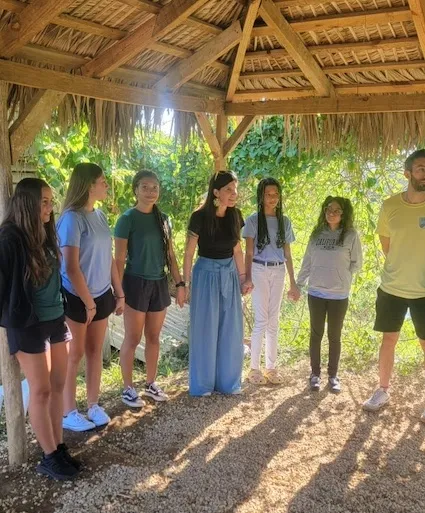
For decades, international families seeking quality bilingual education looked primarily to Europe, North America, or Singapore. That calculus is changing. The Caribbean — and the Dominican Republic in particular — has quietly emerged as one of the most compelling destinations for families who want world-class bilingual schooling combined with an extraordinary quality of life.
This article is a practical guide for international families exploring educational options in the region. We look at the landscape honestly: what the Dominican Republic offers, where its limitations lie, and what sets the North Coast's bilingual education ecosystem apart from the rest of the Caribbean.
Why the Caribbean Is Attracting International Families
Between 2020 and 2026, the number of international families relocating to the Caribbean increased by an estimated 35%. Several forces converged to drive this shift:
- Remote work normalization: Families are no longer tethered to cities where they work. The ability to work from anywhere opened the Caribbean as a viable permanent residence option.
- Cost-of-living advantages: A lifestyle comparable to southern France or coastal Spain can be achieved in Cabarete or Sosúa at 40–60% lower cost.
- Natural environment: Year-round warm climate, beaches, and access to outdoor activities provide a quality of life that northern climates simply cannot match.
- Linguistic richness: The Caribbean is naturally multilingual — Spanish, French, English, and Creole coexist across the islands, making it an organic incubator for bilingual development.
But the single biggest question for families with children is always the same: What about school?
The State of Bilingual Education in the Dominican Republic
The Dominican Republic's public education system operates primarily in Spanish. The country has made significant investments in improving public education since 2013, when it reached the target of spending 4% of GDP on education — a benchmark that places it ahead of many Latin American peers.
However, for international families seeking European-standard bilingual instruction, the private school sector is where the real options lie. And within that sector, there is enormous variation in quality.
Santo Domingo, the capital, hosts the highest concentration of private international schools, including options affiliated with US, Spanish, and French educational systems. But the capital also means city life — traffic, density, and a very different lifestyle from the coastal communities that most relocation-oriented families are drawn to.
The North Coast Difference: Cabarete-Sosúa
The corridor between Cabarete and Sosúa in Puerto Plata Province is arguably the most internationally concentrated community in the entire Caribbean outside of Nassau and Havana. This area is home to residents from more than 60 countries, drawn by the combination of world-class kitesurfing, affordable beachside living, and a vibrant expat community.
What makes this stretch of coastline unusual is not just who lives here — it is the density of international infrastructure that has grown to serve them. There are international clinics, multi-lingual legal services, multinational restaurants, and — critically for families — ESD European School.
"Cabarete-Sosúa is not a resort town pretending to be a community. It is a genuine multi-national community that happens to sit on one of the most beautiful coastlines in the world."
How ESD Compares to Other Caribbean Bilingual Options
Families considering a move to the Caribbean for educational reasons often compare several regional options. Here is an honest comparison of the main considerations:
| Factor | ESD, Cabarete (DR) | Typical Caribbean International School |
|---|---|---|
| Languages offered | Spanish-English / French-English | Usually English only, sometimes Spanish |
| Curriculum alignment | French Ministry of Education + European standards | Varies widely — often US or IB only |
| Class size | Maximum 15 students | Typically 20–30 students |
| Screen-free policy | Yes — institution-wide | Rarely; most schools use tablets heavily |
| Local cost of living | Very affordable by international standards | Varies — often elevated on island destinations |
| International community | 60+ nationalities in Cabarete-Sosúa corridor | Often smaller expat communities |
What to Look for When Choosing a Bilingual School in the Region
If you are evaluating bilingual schools in the Dominican Republic or wider Caribbean for your family, here are the five questions that matter most:
1. What language is the primary medium of instruction — and who teaches it?
Many schools claim to be "bilingual" but use one language for 80% of instruction and a second for 20% of a single class. Ask for a specific language distribution across subjects, and verify that teachers are native or near-native speakers of their instructional language.
2. What curriculum standard does the school align with?
Families who may return to Europe or North America need transcripts that will be recognized. French Ministry of Education alignment (as at ESD) provides recognition across France and francophone Europe. IB and US-aligned curricula provide recognition in North American and many international contexts. Ask specifically.
3. What is the class size and student-to-teacher ratio?
For bilingual acquisition to work, every student needs daily verbal interaction in both languages. This is only possible in small classes. If a school has more than 18 students per class, language development will be slower.
4. What is the school's position on technology?
This is increasingly a values question as much as a pedagogical one. Schools that integrate screens heavily into learning see lower verbal communication development and higher attention fragmentation. Ask specifically about the school's device policy during class hours.
5. What is the expat community like in the surrounding area?
Your child's bilingual development does not end at the school gate. The community they live in shapes their language use, social relationships, and cultural exposure outside of school. Cabarete-Sosúa's density of international families means that children interact with peers from 20+ nationalities daily — an extension of the classroom that most locations cannot offer.
The Long-Term Case for the Dominican Republic
The Dominican Republic is not a temporary solution for families in transit. It is, for a growing number of international families, a permanent home. The country offers political stability by Caribbean standards, a rapidly improving infrastructure (particularly on the North Coast), a welcoming attitude toward foreign residents, and — through institutions like ESD — a genuine pathway to world-class bilingual education.
The families we see arriving in Cabarete today are not retreating from something. They are choosing something deliberately: a life where their children grow up speaking two or three languages, playing in the ocean after school, and building friendships with peers from around the world. That is not a compromise. For many families, it is exactly the future they had hoped to give their children.
If you are in the research phase of deciding where to settle your family, we invite you to have a direct conversation with our Director, Kathy Reynaud. No sales pitch — just an honest conversation about whether ESD and Cabarete are the right fit for your family.
Planning a Move to the Dominican Republic?
Schedule a free 10-minute admissions call and we will answer every question — school, lifestyle, and logistics.