Effective Strategies of Bilingual Education Schools: What the Research Says — and What We Do
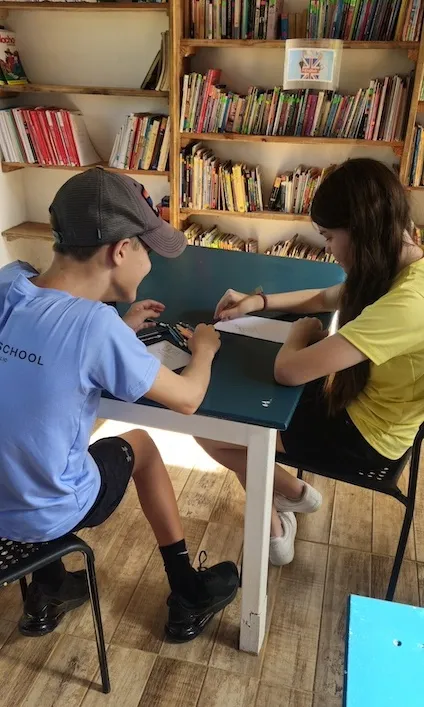
Bilingual education is one of the most powerful educational investments a family can make. Children who grow up fluent in two languages consistently outperform monolingual peers in executive function, problem-solving, and academic adaptability. But not all bilingual schools are created equal.
At ESD European School in Cabarete, we have spent years refining what we believe are the seven pillars of a truly effective bilingual education model. This article explains what they are — and why each one matters for your child's future.
1. Immersion, Not Translation
The single biggest mistake in bilingual education is treating the second language as a subject to be studied rather than a medium to live in. True bilingualism emerges from immersion — when the second language is the vehicle through which a student learns science, history, and mathematics, not just grammar rules and vocabulary lists.
At ESD, both target languages are used throughout the school day across all subjects. A student in our Spanish-English track learns geography in English and mathematics in Spanish. The brain does not file these languages separately — it integrates them into a rich, connected cognitive architecture.
"Children who learn through immersion don't merely acquire a second language — they acquire a second way of thinking."
2. Native-Level Teachers in Each Language
The quality of a bilingual school is only as strong as the linguistic authenticity of its teachers. A student cannot develop natural, idiomatic fluency by learning from someone who is themselves a second-language speaker with an intermediate command of the language.
ESD employs teachers who speak their language of instruction at a native or near-native level. Our French-track students learn from educators trained in France. Our English-track students interact daily with native English speakers. This is non-negotiable to us — and the results are measurable within months of enrollment.
3. Small Class Sizes
Bilingual acquisition requires constant verbal interaction. Students need to speak, make mistakes, be corrected in context, and speak again. This process collapses in a classroom of 30 students. With 15 or fewer students per class, every child has multiple opportunities to use both languages actively each day.
The research on this is unambiguous. A 2019 meta-analysis of bilingual education programs across Europe found that class sizes under 15 students correlated with a 40% improvement in second-language oral fluency outcomes over three years, compared to classes of 25 or more.
4. Cross-Disciplinary Language Use
Effective bilingual schools do not confine each language to specific classes. Language is not a subject — it is a cognitive environment. When a student transitions from a Math lesson in Spanish to a Science discussion in English, both languages are reinforced and deepened simultaneously.
ESD designs its weekly schedule to ensure each language is engaged across multiple subject areas. This prevents the common "language silo" problem where children become fluent in subject-specific vocabulary in one language but cannot transfer concepts across linguistic contexts.
5. Screen-Free Learning
This may surprise some families initially, but our screen-free policy is one of the most powerful tools in our pedagogical arsenal. Devices fragment attention, reduce verbal interaction, and replace genuine communication with passive content consumption.
Language acquisition is fundamentally social. It requires listening, speaking, reading physical texts, writing by hand, and engaging in real conversations. Our screen-free environment forces exactly this kind of active engagement every hour of every school day. Students who join ESD often demonstrate noticeably stronger verbal communication skills within their first semester — in both languages.
6. Consistent Institutional Language Protocols
A bilingual school must be coherent at the institutional level, not just in the classroom. At ESD, our administrative communications with families, our report cards, and our formal documents follow clear bilingual protocols. This consistency models for students that both languages have equal status, equal prestige, and equal utility.
When a school treats one language as dominant and the other as supplemental, children unconsciously adopt the same hierarchy — and their development in the "second" language suffers. ESD maintains strict parity between its working languages at every level.
7. Cultural Integration, Not Just Linguistic Instruction
Language is inseparable from culture. Truly effective bilingual schools teach the cultures that speak the languages they teach. At ESD, French-track students engage with French literature, history, and civic traditions. English-track students explore literature and cultural references from the English-speaking world.
This cultural richness serves a practical purpose: it gives students authentic motivations to use their languages beyond the classroom. A child who has internalized a love for French storytelling or American history is a child who will seek out that language independently — and that intrinsic motivation is the engine of long-term fluency.
What This Means for Your Family
Choosing a bilingual school is not simply a decision about language. It is a decision about the cognitive tools your child will carry for the rest of their life. Bilingual individuals are more adaptable, more empathetic, more competitive in the global job market, and — according to emerging neurological research — show greater resilience against cognitive decline later in life.
The strategies above are not theoretical aspirations at ESD. They are the daily lived reality of every student who walks through our doors in Cabarete. If you are considering enrolling your child, we invite you to schedule a free 10-minute call with our Director, Kathy Reynaud, to see how these principles would apply to your child's specific situation.
Want to See This in Action?
Schedule a free admissions call or request a campus visit to experience the ESD difference firsthand.
Book Your Admissions Call